The Evolution of the Mixed Observer Team (MOT)
Communities are often the first to experience the warning signs of insecurity, yet they are rarely at the centre of designing solutions. For decades, responses to insecurity have largely focused on formal security institutions, while overlooking the immense value of women as partners in preventing violence, strengthening community resilience, and building trust between citizens and the state.
Recognising this gap, the Rule of Law and Empowerment Initiative (Partners West Africa Nigeria – PWAN) set out to develop a model that was not only innovative but also community-owned, collaborative, and sustainable. The objective was simple but ambitious: create a platform where women could move beyond being viewed solely as victims of insecurity to becoming active contributors to community safety, peacebuilding, and access to justice.
This vision gave birth to the Mixed Observer Team (MOT), a women-led, multi-sectoral community security platform that brings together female representatives from formal security institutions, justice institutions, government agencies, civil society organisations, traditional and religious institutions, and community structures to jointly identify, prevent, and respond to security threats, particularly those affecting women, girls, and other vulnerable groups.
The model was first piloted in Borno, Adamawa, and Yobe States, where communities were grappling with the devastating effects of insurgency and displacement. Building on its success and the confidence it inspired among communities and state actors, Partners West Africa Nigeria subsequently expanded the model to Kaduna and Niger States through additional donor support.
Today, the MOT has evolved beyond a project intervention into a functioning community security mechanism that demonstrates how women can effectively influence local security governance. It represents one of the few platforms in Nigeria where women from diverse institutions work collectively to identify security risks, coordinate responses, facilitate referrals, and engage communities using the combined strength of their expertise, networks, and institutional mandates.
What Makes the Mixed Observer Team Different?
Many community structures are established to implement specific projects or develop policy recommendations. While important, these structures often become inactive once project funding ends.
The Mixed Observer Team is fundamentally different.
Rather than creating another committee, Partners West Africa Nigeria established a functional coordination platform that pools existing expertise and institutional mandates to solve real security problems at community level.
Each MOT brings together women drawn from:
- Nigeria Police Force (NPF)
- Nigeria Security and Civil Defence Corps (NSCDC)
- National Human Rights Commission (NHRC)
- Legal Aid Council of Nigeria
- Judiciary
- Ministry of Women Affairs
- Ministry of Humanitarian Affairs
- Traditional and religious institutions
- Women-led organisations
- Civil society organisations
- Representatives of Persons with Disabilities
- Other relevant community actors
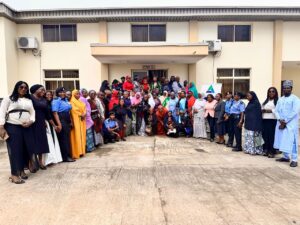
This diversity enables the platform to respond to complex security issues through coordinated action rather than isolated interventions. Instead of survivors navigating multiple institutions independently, the institutions work together around the survivor. Instead of communities waiting until violence erupts, the MOT identifies warning signs early and mobilises appropriate responses before situations escalate. Instead of fragmented responses, the MOT provides a coordinated, survivor-centred mechanism that combines prevention, protection, mediation, referral, advocacy, and access to justice.
Wherever the MOT has been established, it has strengthened trust between communities and service providers while demonstrating the practical value of women’s leadership in security governance.
From Meetings to Measurable Community Impact
The success of the Mixed Observer Team cannot be measured by the number of meetings held, but by the lives protected and the conflicts prevented.
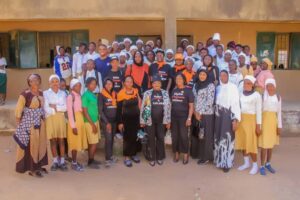
Across the states where Partners West Africa Nigeria has implemented the model, MOT members have become trusted first responders within their communities, using dialogue, mediation, referrals, advocacy, and coordinated interventions to address emerging security concerns.
Their interventions have contributed to:
- Preventing violent conflicts through early warning and mediation.
- Supporting survivors of Gender-Based Violence with medical care, psychosocial support, legal assistance, economic empowerment, and access to justice.
- Preventing forced and early marriages through timely community engagement and referral.
- Reporting suspected child trafficking and safeguarding vulnerable children.
- Responding to domestic violence through coordinated engagement with survivors, perpetrators, community leaders, and law enforcement agencies.
- Mediating interfaith and communal disputes before they escalated into violence.
- Conducting community awareness campaigns on Gender-Based Violence, human rights, child protection, drug abuse, and peaceful coexistence.
- Establishing school-based awareness programmes and clubs that promote positive social norms among young people.
- Implementing livelihood interventions that strengthen women’s economic resilience and reduce vulnerability to abuse.
One notable example occurred in Bida, where a religious disagreement threatened to escalate into wider community conflict. Through rapid coordination and engagement with traditional authorities, the MOT facilitated dialogue that peacefully resolved the dispute before violence occurred.
In another community, MOT members jointly intervened in a persistent domestic violence case involving a woman repeatedly subjected to physical abuse. By engaging the perpetrator alongside security institutions and making clear the legal consequences of continued violence, the team succeeded in stopping the abuse while ensuring the survivor received appropriate support and protection.
These examples illustrate the strength of the MOT model: it does not simply respond to violence after it occurs; it actively works to prevent violence before it escalates.
Lessons from Five States
After several years of implementation across Northern Nigeria, the Mixed Observer Team model offers important lessons for policymakers, donors, and practitioners working at the intersection of security, governance, and gender equality.
Women build trust where formal institutions often cannot. Community members, particularly women and girls, are often more willing to report sensitive issues to women who understand their lived realities.
Community ownership sustains impact. One of the strongest indicators of the model’s success is that several MOT platforms have remained active long after donor funding ended. Members continue organising meetings, responding to cases, and engaging stakeholders because they view the platform as their own rather than a donor initiative.
Women’s participation strengthens Early Warning and Early Response. Women frequently identify emerging risks long before they develop into larger security threats. Their social networks and community presence make them invaluable contributors to conflict prevention.
Multi-sectoral collaboration improves access to justice. By bringing together security agencies, legal institutions, social welfare actors, and civil society organisations, survivors receive faster, more coordinated, and more holistic support.
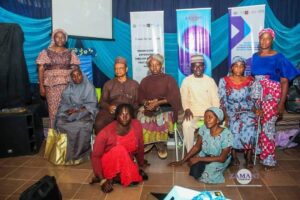
Economic empowerment contributes to protection. Experience has shown that financial dependency often traps women in abusive situations. Recognising this, several MOT platforms integrated livelihood support into their work. In one initiative, over sixty women received vocational training in the production of food seasoning, soap, beverages, and other household products, while selected participants received starter packs to launch small businesses. These interventions not only strengthened household incomes but also enhanced women’s ability to make independent decisions and reduce their vulnerability to violence.
Why This Model Matters
The Mixed Observer Team represents more than a successful project—it offers a practical model for strengthening community security through women’s leadership.
Its greatest strengths lie in its sustainability, cost-effectiveness, and local ownership.
Because the platform draws on existing institutions and community structures rather than creating parallel systems, operational costs remain relatively low while institutional ownership remains high.
Communities identify with the MOT because its members are drawn from within the communities they serve. This local legitimacy has helped bridge longstanding trust gaps between citizens and formal service providers.
The model also aligns strongly with global commitments under the Women, Peace and Security (WPS) Agenda, demonstrating that women’s participation in security governance is not symbolic—it delivers measurable improvements in prevention, protection, accountability, and peacebuilding.
As governments and development partners increasingly prioritise localisation and community-led approaches, the MOT provides a tested, scalable model that can be adapted across different contexts.
Conclusion
The experience of the Mixed Observer Team demonstrates a simple but profound lesson: sustainable security cannot be achieved through armed responses alone.
Communities become safer when women are recognised as leaders, trusted as partners, and empowered to work alongside formal institutions in preventing violence, protecting survivors, and strengthening access to justice.
The Mixed Observer Team is more than an innovation in community security, it is evidence that when women move from observation to action, entire communities become more resilient, more inclusive, and ultimately, more secure.
Nana-Hauwa Isa
Program Officer