- Version
- Download 3
- File Size 503 KB
- File Count 1
- Create Date October 13, 2026
- Last Updated October 13, 2026
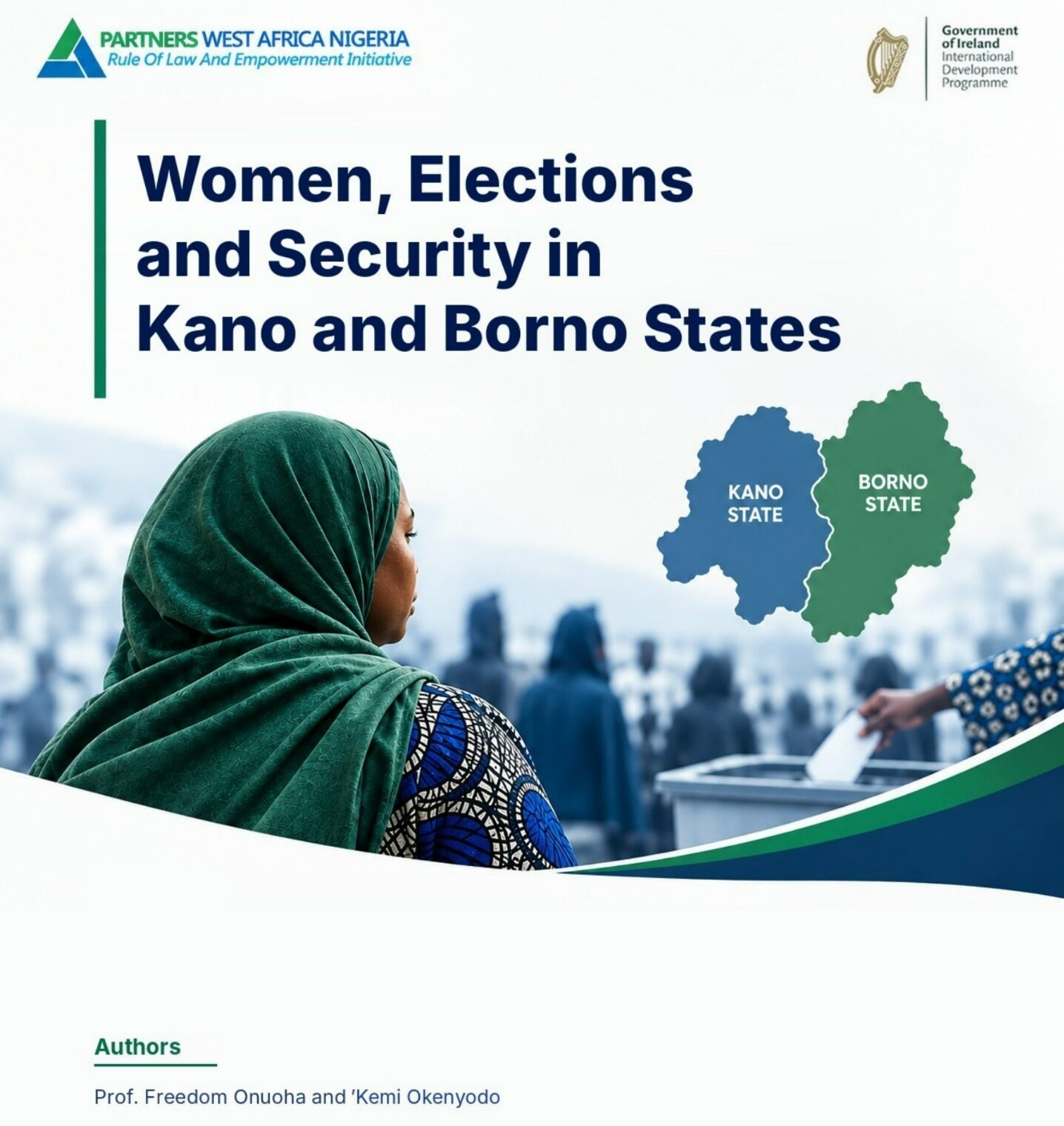
Women Elections and Security in Kano and Borno States
As Nigeria prepares for the 2027 general elections, women’s safety and meaningful participation remain pressing concerns in Kano and Borno States. Women accounted for 44.40 per cent of registered voters in Kano and 42.60 per cent in Borno in 2023 and play prominent roles as campaigners, mobilisers and party supporters. Yet this participation has not translated into comparable political influence: neither state has elected a woman as governor, and women remain underrepresented among candidates, legislators and senior party decision-makers.
The states face distinct but overlapping threats. In Kano, respondents highlighted economic pressure, political intimidation, electoral violence, hate speech and exclusion, compounded by urban gang violence, expanding banditry, abduction risks and the proliferation of small arms. In Borno, misinformation and political exclusion received the highest stakeholder scores, against a backdrop of insurgency, displacement, abduction and movement restrictions.
This comparative assessment brings together findings from the Kano and Borno gender-based election security studies to identify threats to women’s safe and meaningful participation. It presents practical recommendations for electoral and security agencies, political parties, government institutions, civil society, development partners, the media and community leaders, with a focus on protection, accountability and women’s access to political influence.